Understanding electrode materials - copper
author: Milliohm Electronics
2025-06-30
Common copper alloys are brass (Cu-Zn alloy), cupronickel (Cu-Ni alloy), and bronze (all copper alloys except cupronickel brass)
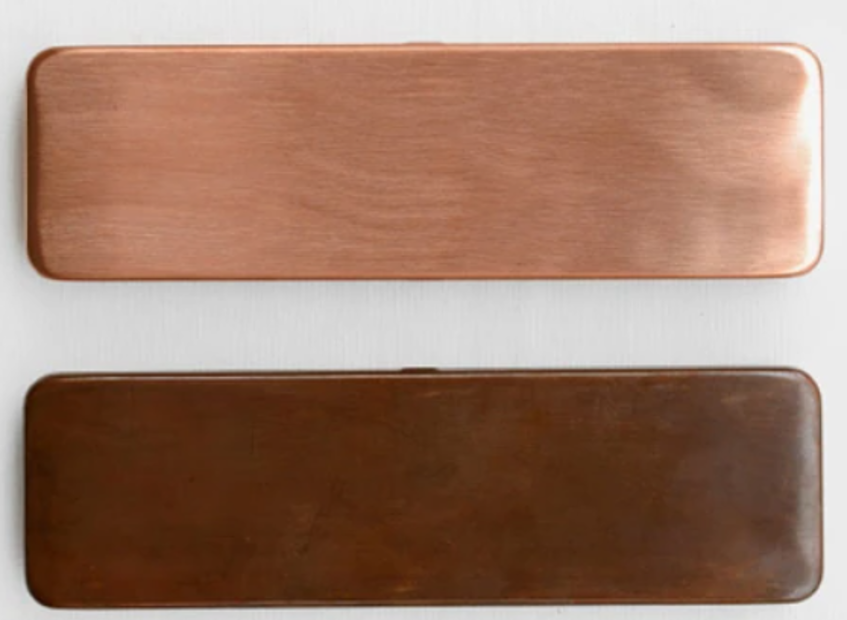
The above picture is the color of copper without oxidation: purple-red
The picture below is the color of copper after oxidation: dark red. The main components of the oxide film generated according to the oxygen content and temperature are CuO (black) and Cu2O (red) in different proportions. If it is continuously exposed to humid air, it will absorb carbon dioxide and water in the air and eventually transform into basic copper carbonate 2Cu+H2O+CO2+O2=Cu2(OH)2CO3 (copper green)
1. Physical Properties:
- 1-1 Density:
The density of copper is approximately 8.96 grams per cubic centimeter (g/cm³). This means that copper is a relatively heavy metal, which contributes to its use in applications that require high weight and strength.
- 1-2 Melting Point:
The melting point of copper is approximately 1083.4 degrees Celsius (°C). This relatively high temperature allows copper to maintain its structural integrity in high temperature environments and is suitable for a variety of high temperature applications
- 1-3 Thermal Conductivity:
The thermal conductivity of copper is very high, approximately 400 watts per meter Kelvin (W/m·K). This is one of the main reasons why copper is widely used as a thermal conductive material, such as in heat sinks and wires.
(Silver: 429 W/mk, aluminum: 237 W/mk, iron: 48 W/mk, water: 0.6 W/m·K, which means that the time efficiency of heat transfer per unit area under unit temperature difference is 666 times that of water and 8.3 times that of iron
(Silver: 429 W/mk, aluminum: 237 W/mk, iron: 48 W/mk, water: 0.6 W/m·K, which means that the time efficiency of heat transfer per unit area under unit temperature difference is 666 times that of water and 8.3 times that of iron
- 1-4 Resistivity: Copper has extremely low resistivity and is a commonly used conductive material in electrical engineering. Its resistivity is 1.75 × 10⁻⁸ for copper, second only to 1.65 × 10⁻⁸ for silver (4.4 × 10⁻⁷ for manganese copper, 5.0 × 10⁻⁷ for constantan, 1.4 × 10⁻⁶ for iron-chromium aluminum alloy) Conductivity σ (S/m-Siemens/meter) = the reciprocal of resistivity ρ (Ω/m-ohm/meter), which means that the smaller the resistivity of the material, the better the conductivity
- 1-5 Coefficient of thermal expansion:
Copper has a coefficient of thermal expansion of about 17.5×10^-6/°C. This means that copper changes volume when the temperature changes, which needs to be considered when designing and manufacturing precision equipment. (Chromium: 6.2, ceramics basically do not change)
- 1-6 Hardness: Copper has a relatively low hardness, usually around 3 on the Mohs scale. This makes copper easy to process, but also means that it may need to be combined with other materials or alloyed to improve its wear resistance and strength.
- 1-7 Ductility and toughness:
Copper has good ductility and toughness and can be easily stretched into wire or rolled into thin sheets, which makes it very useful in manufacturing a variety of products
2 Chemical properties:
- 2-1 Corrosion resistance:
Copper is relatively stable in dry air and is not easily oxidized. In a humid environment, a layer of green copper salt (mainly basic copper carbonate, commonly known as verdigris) will gradually form on the surface of copper. This film can protect the copper from further corrosion. Therefore, copper has good corrosion resistance in many outdoor applications.
- 2-2 Antioxidation:
Copper easily reacts with oxygen at high temperatures to form cuprous oxide (Cu2O). However, at room temperature, copper has good oxidation resistance, especially after the formation of verdigris, its oxidation resistance is enhanced. In high temperature environments, copper usually requires coatings or other protective measures to prevent oxidation. (Copper begins to gradually accelerate oxidation above 100°C, gradually reaches a peak at 200°C~300°C, and the oxidation rate is basically stable after 300°C)
- 2-3 Reaction with other elements:
Copper can react with a variety of non-metallic elements such as sulfur, halogens, etc. For example, copper forms black copper sulfide (CuS) in an environment containing hydrogen sulfide, and the production of CuS accelerates the oxidation of copper 2CuS+O2====2CuO+2S
- 2-4 Electrochemical activity:
Copper's position in the electrochemical series makes it less susceptible to corrosion in most environments. However, in electrolyte solutions, copper may undergo electrochemical corrosion, especially when there is a potential difference.
- 2-5 Acid and alkali resistance:
Copper has good resistance to most dilute acids and alkalis, but dissolves rapidly in concentrated sulfuric acid and concentrated nitric acid. Copper also generally exhibits good stability in alkaline environments. (Salt spray performs well)
3 Copper grades:
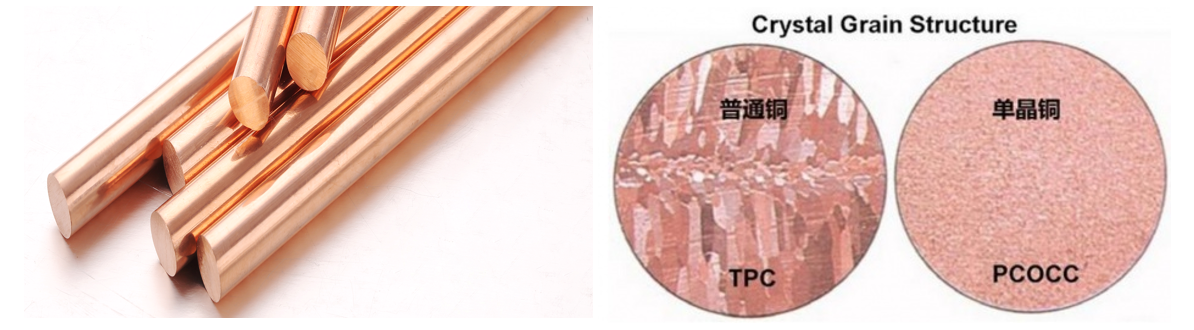
From high to low purity
Single crystal copper > oxygen-free copper > industrial pure copper > deoxidized copper
Oxygen-free single crystal copper (OCC) refers to a purity of more than 99.996% (up to 99.9999%), which is a high-purity oxygen-free copper. The entire single crystal copper is composed of only one grain, and there is no "grain boundary" between the grains. It has lower impedance and smaller signal loss rate. It is generally used in high-precision signal transmission, integrated circuit substrates, communication cables, aerospace vehicles, high-conductivity cables and wires, etc.
Oxygen-free copper (OFC-TU0, TU1, TU2) refers to pure copper that does not contain oxygen or any deoxidizer residues. But in fact, it still contains very trace amounts of oxygen and some impurities. According to the standard, the oxygen content is not more than 0.003%, the total impurity content is not more than 0.05%, and the copper purity is greater than 99.95%
Industrial pure copper (oxygen-containing copper T1, T2, T3) Pure copper, as the name suggests, is the copper with the highest copper content. Because of its purple color, it is also called red copper. The main components are copper and silver, with a content of 99.5-99.95%; the main impurity elements are phosphorus, bismuth, antimony, arsenic, iron, nickel, lead, tin, sulfur, zinc, oxygen, etc.; used to make conductive equipment, Compared with oxygen-free copper, there may be "hydrogen disease/hydrogen embrittlement" causing internal cavities or fine cracks,
Deoxidized copper (TP1, TP2) copper + silver Cu + Ag: ≥99.90, phosphorus P: 0.005-0.012, phosphorus deoxidized copper has good welding performance and cold bending performance, generally has no tendency to "hydrogen disease", can be processed and used in a reducing atmosphere, but should not be processed and used in an oxidizing atmosphere. TP1 has less residual phosphorus than TP2, so its electrical and thermal conductivity are higher than TP2. It is generally used as gasoline or gas transmission pipes, drain pipes, condensers, condensers, evaporators, and heat exchangers.
Hydrogen embrittlement/hydrogen disease: When oxygen-containing copper is heated in a reducing atmosphere containing hydrogen or carbon monoxide, hydrogen or carbon monoxide easily reacts with cuprous oxide (Cu2O) at the grain boundary to produce high-pressure water vapor or carbon dioxide gas, which can cause copper to crack or cause internal cavities. This phenomenon is often called copper's "hydrogen disease". It will have a certain impact on conductivity and heat dissipation.
4 Direct current:
When direct current passes through a conductor, the distribution of electrons on the conductor cross section is uniform. This is because the characteristic of direct current (DC) is that the direction and magnitude of the current remain unchanged. Under steady-state conditions, electrons will move along the conductor at a constant speed, thus forming a uniform current density on the entire conductor cross section.
5 Alternating current:
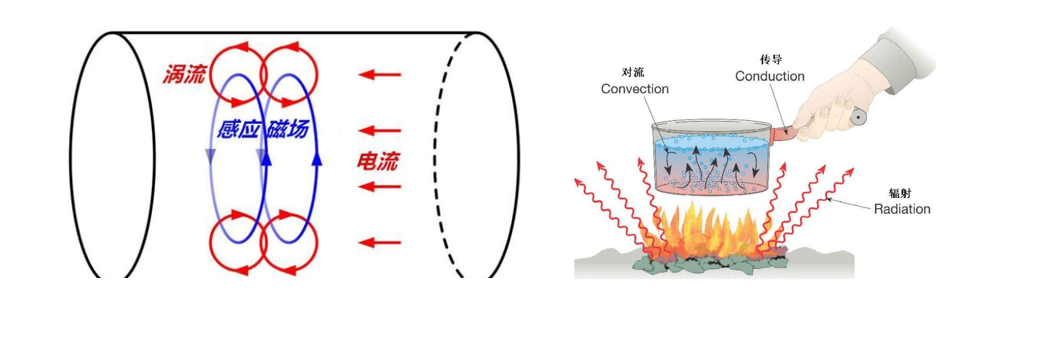
Alternating current refers to current whose direction changes periodically over time, generally at 50Hz. When alternating current passes through a conductor, the distribution of the current will approach the surface of the conductor. The higher the frequency, the more obvious this phenomenon will be, and even the current will move completely on the surface of the conductor and the current density inside the conductor will be 0. This phenomenon is called the "skin effect". Eddy current is also the main cause of the skin effect
6 Heat dissipation methods:
- 6-1 Radiation: Thermal radiation is the process of an object transferring heat outward in the form of electromagnetic waves. The higher the temperature, the greater the total energy radiated
The thermal radiation efficiency of copper oxide is 14 times that of copper, so under DC conditions, a certain oxide layer will improve the heat dissipation efficiency and have little effect on the resistance value
- 6-2 Convection: Convection heat transfer refers to the heat transfer between the surface of an object and the fluid. When copper comes into contact with air, the air will form a thin layer on the copper surface. This thin layer will become hotter or colder as the temperature changes, causing flow. This flow will increase the effect of heat transfer
- 6-3 Conduction: Conduction heat is transferred from the higher temperature part of the object along the object to the lower temperature part
Unlocking the automotive-grade four-terminal alloy resistor: the perfect combination of high precision and reliability
The application principle and specific method of bare alloy resistors in two or three wheeled vehicles
Related Article
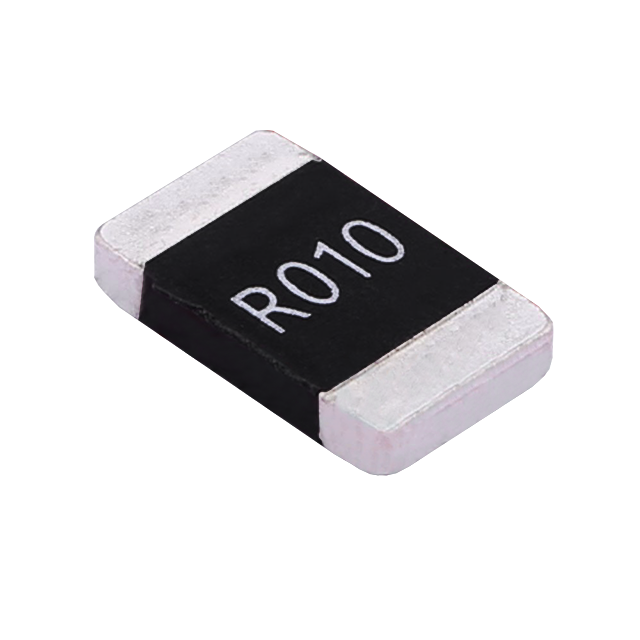
Key performance features: high power handling, ultra-low temperature drift, high overload withstand capability, low inductance at high frequency, and automotive-grade high reliability.
HoCG4527 Automotive Grade Molded Alloy Resistor
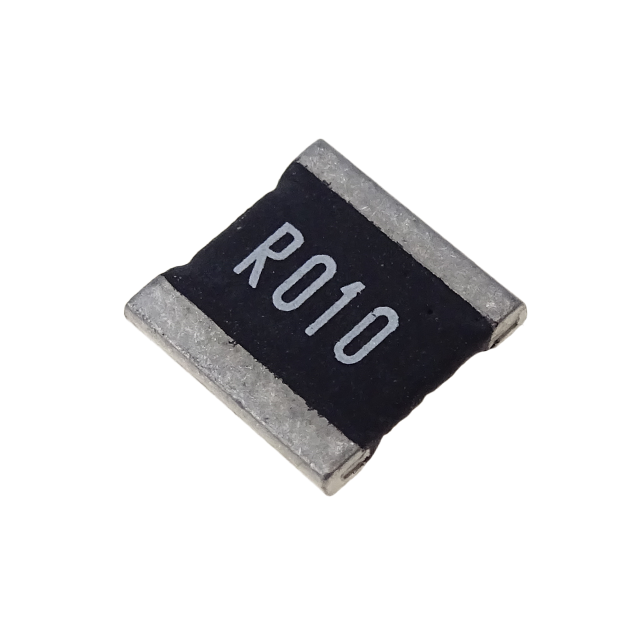
Key features: ultra-high current-carrying capability, ultra-high stability, ultra-low temperature drift, and low inductance at high frequency.
HoCG2728 Automotive Grade Molded Alloy Resistor

Alloy resistors, with their unique technical advantages—ultra-low resistance, low temperature drift, high power handling, low parasitic parameters, and strong pulse withstand capability—have become core components in current sensing, overload protection, and load matching circuits for EV charging stations.
Alloy Resistor Applications in New Energy