Suppression and Optimization of EMF in Shunt Resistors
I. Material Selection: Utilizing Homogeneous Alloys with Low Thermoelectric Power
The resistor element material fundamentally determines thermal EMF performance and must exhibit a low thermoelectric power, low TCR, and high resistivity:
-
The mainstream choice is homogeneous manganese-copper alloy (Mn75Ni15Cu10). Its thermoelectric power against pure copper can be as low as <0.1μV/℃, coupled with a low temperature coefficient (±20ppm/℃), making it the core material for high-precision shunt resistors.
-
Avoid using standard constantan alloy. Its thermoelectric power against copper is approximately 5~10μV/℃, limiting its suitability to low-precision consumer applications.
-
The resistor element must be integrally roll-formed to eliminate splicing processes, preventing internal temperature gradients and the generation of additional thermal EMF within the body.
II. Structural Design: Symmetrical Configuration for Thermal EMF Cancellation
Leveraging the principle that thermal EMFs at two contact points cancel each other when symmetrical, a symmetrical shunt resistor structure is designed to minimize thermal EMF effects at the hardware level:
-
Employ a dual-terminal symmetrical layout. This ensures that the contact points between the copper terminals and the resistor element at both ends experience the same temperature environment. Consequently, the thermal EMFs at the two contact points are equal in magnitude but opposite in direction, canceling out the majority of the total thermal EMF.
-
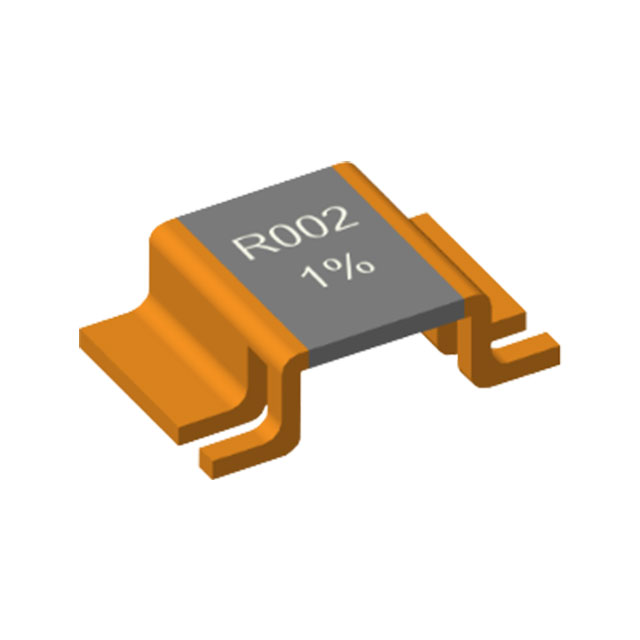
Integrate a high-thermal-conductivity substrate. Mounting the resistor element and terminal welds onto a copper substrate with high thermal conductivity reduces the temperature differential between the element and the terminals. This substrate also facilitates uniform heat dissipation, preventing localized overheating, as illustrated in the diagram below.
-

III. Welding Process: Minimizing Contact Resistance to Prevent Localized Heating
Solder joints are the primary source of temperature gradients in shunt resistors. Excessive contact resistance can lead to localized heating at the joint, exacerbating temperature differentials. Therefore, the welding process must be optimized:
-
Employ electron beam welding as a replacement for traditional soldering. This achieves a metallurgical bond between the resistor element and copper terminals, reducing contact resistance to the μΩ level and preventing localized heating.
-
Control welding process parameters to minimize the heat-affected zone, preventing phase changes in the resistor element alloy caused by high temperatures that could lead to sudden shifts in resistance value and thermal EMF coefficient.
-
Conduct high-temperature aging treatment after welding to eliminate welding stress and ensure the temperature stability of the contact points.
IV. Installation and Usage: Optimizing the External Environment to Minimize In-Service Temperature Differentials
Even with a low thermal EMF shunt resistor, improper installation and usage can still induce temperature differentials due to the external environment, leading to thermal EMF interference. The following engineering precautions are essential:
-
During installation, position the shunt resistor close to the heat dissipation substrate and fill gaps with thermally conductive silicone to enhance heat dissipation efficiency and prevent localized overheating caused by an air gap beneath the component.
-
Keep the connection points between the shunt terminals and external circuitry away from heat sources (such as power transistors and inductors) to prevent external heat from being conducted to the contact points.
-
Implement symmetrical routing during PCB layout to ensure that the sensing traces on both ends of the shunt are in the same temperature environment. This prevents thermal EMF generation within the sensing traces themselves, which could add to the shunt's error.
-
In wide temperature range applications, incorporate thermal EMF compensation circuits (such as bridge compensation or operational amplifier nulling) to provide software or hardware compensation for residual thermal EMF.
Through the optimization of materials, structure, and processes, product design reduces thermal EMF at its source. Application engineers minimize in-service temperature interference through proper installation, routing, and compensation. It is the combination of these efforts that enables the shunt resistor's measurement accuracy to meet design specifications and ensures stable system operation.
In summary, the true competitiveness of a high-precision shunt resistor lies not merely in low resistance and high stability, but in its ultimate suppression of thermal EMF.
For further information regarding our products, solutions, or their application in specific scenarios, please do not hesitate to contact our technical support team.

Anti-detachment technology for the soldering of alloy resistors and bus bars
High-Current Sensing Technology and Operating Condition Adaptation Solutions
Related Article