Effect of Heat Treatment on TCR and Long-Term Resistance Stability of Manganin Alloy Resistors
I. TCR Is a Superposition of Three Physical Contributions
The temperature dependence of a resistor's resistivity can be decomposed into three contributions:
Electron Concentration Term. When Mn is in solid solution in Manganin alloy, the electron concentration between its d-band and the main band varies with temperature, directly contributing to the temperature coefficient of resistivity. This is the dominant source of TCR in the Manganin system. This term is set by alloy composition and is only weakly linked to the heat treatment path.
Phonon Scattering Term. Scattering of conduction electrons by lattice vibrations increases with rising temperature. This is the common background of the temperature coefficient of resistivity for all metals, and its variation is limited for a given composition.
Structural Scattering Term. Electron scattering by microstructural features such as grain boundaries, dislocations, and precipitates. Its magnitude is small, but its temperature sensitivity is high—because heat treatment, while changing grain size and scatter-center density, also alters the distribution and thermal stability of these scatter centers.
The conclusion is straightforward: the main body of TCR is locked by composition, and heat treatment determines the stable range of the TCR grade rather than the baseline TCR value.
II. Position of Heat Treatment in the Process Chain
The manufacturing sequence of a Manganin alloy resistor body is: melting and casting → ingot homogenization → heat treatment → rolling → surface treatment → termination welding. Heat treatment sits between ingot casting and rolling and performs four tasks:
Homogenization Annealing. During casting solidification, Mn segregates between dendrites, causing pronounced microstructural differences between the interior and exterior of the ingot. Homogenization annealing redistributes the composition and eliminates segregation bands, thereby determining the within-batch consistency of initial resistance.
Recrystallization Annealing. Hot rolling introduces numerous dislocations and deformation bands. Recrystallization annealing converts the deformed microstructure into equiaxed recrystallized grains, bringing grain size into a controlled range. The coarser the grains, the lower the grain-boundary scattering contribution, and the closer the resistivity approaches the bulk value.
Stabilization Treatment. This relieves residual stress accumulated from rolling and heat treatment. Residual stress is an important source of long-term drift: during thermal cycling, it superimposes on thermal expansion, creating alternating loads at the interface between the resistor body and the copper electrodes.
Precipitate State Control. The morphology and size of Mn-rich precipitates in Manganin alloy adjust with temperature. The redistribution of precipitates in the matrix is one of the mechanisms by which resistance slowly changes with time at constant temperature. Stabilization treatment brings precipitates into a stable state, after which resistance enters a stable plateau.
III. Three Pathways by Which Heat Treatment Affects Stability
Pathway 1: Microstructural Stabilization → Resistance Enters Steady State. After heat treatment, the microstructure of the resistor body remains stable within the rated temperature range, and the change in resistance with operating time converges. Accelerated testing shows that when the same batch of samples is continuously loaded at the rated temperature and the drift curve of resistance versus time is measured, the drift levels off after reaching a stable plateau.
Pathway 2: Residual Stress Relief → Reduced Resistance Drift. Residual stress manifests as an instantaneous change in resistance upon relief and generates a cumulative drift component in subsequent thermal cycling. Stabilization treatment keeps this stress at a low level, narrowing the reversible resistance change range.
Pathway 3: Grain-Boundary Bonding Strengthening → Improved Interface Stability. In a fully recrystallized microstructure, grain-boundary bonding strength and ductility are better, and stress relief during thermal cycling is dispersed through plastic deformation rather than concentrated at the interface. This pathway also relates to the stability of subsequent surface treatment and welding processes.
IV. Milliohm's Process Implementation and Data Basis
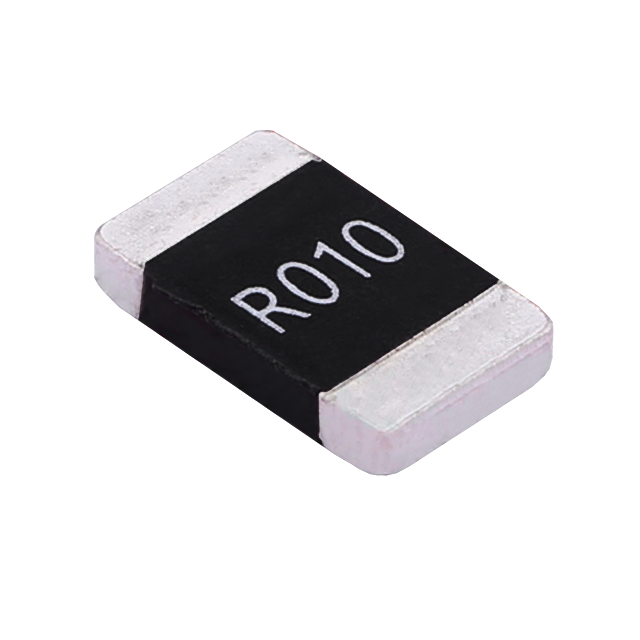
For bare alloy resistors (HoLRS series), Milliohm uses a pure alloy resistor body, performs welding with independently designed, professionally self-controllable electron beam welding equipment, and applies full-process control covering atmosphere protection during melting, casting temperature and speed control, rolling passes and annealing conditions, and termination electrode bonding quality.
Taking the bare alloy resistor 2512 (HoLRS2512, 0.2 mΩ–5 mΩ, 3 W, −55°C to +170°C) as an example, its heat treatment and microstructural stability are ultimately confirmed by the following reliability test data:
| Test Item | Test Conditions | Acceptance Criteria |
| Short-Time Overload | 5x rated power, 5 s (JIS-C-5201) | ΔR ≤ ±0.5% |
| Temperature Cycling | 1000 cycles (−55°C to 155°C), 30 min dwell, 15°C/min ramp (TEST 4) | ΔR ≤ ±0.5%, no visual damage |
| High-Temperature Storage | 155°C, 1000 h, no load (TEST 3) | ΔR ≤ ±0.5% |
| Damp Heat | 1000 h, 85°C/85% RH, 10% rated power (TEST 7) | ΔR ≤ ±0.5% |
| Load Life | Rated current, Ta = 125°C, 100% power, 1000 h (TEST 8) | ΔR ≤ ±0.5% |
| Low-Temperature Storage | −55°C, 1000 h (JIS-C-5201-4.23.4) | ΔR ≤ ±0.5% |
| Mechanical Shock / Vibration | 100 g half-sine, 0.5 ms / 10–2000 Hz, 3 axes (TEST 13/14) | ΔR ≤ ±0.5% |
V. Selection Guidelines
1. Consider the TCR grade alongside its applicable range. The core of TCR in the Manganin system is dictated by chemical composition, whereas heat treatment dictates the stable range of that grade. During selection, verify against the actual operating temperature span: the wider the span, the greater the weight of temperature drift within the total error budget, and the more the specification budget should be weighted toward TCR.
2. Evaluate heat treatment outcomes in conjunction with reliability data. Microstructural stability is ultimately reflected in long-term drift. The acceptance criteria and test conditions of the four test categories—temperature cycling, high-temperature storage, damp heat, and load life—must be referenced as a set; results obtained under different conditions are not directly comparable.
3. Align the derating basis with the thermal state. The entire Milliohm product line uses 70°C as the baseline for rated power. The power-temperature relationship is defined by the derating curve, with linear derating to zero above 70°C. For high-current applications, heat treatment and the current coefficient should be evaluated together, confirming TCR, current coefficient, and derating curve as an integrated set. Once actual ambient conditions are provided, our FAE team can calculate the usable power based on the derating curve and recommend the corresponding package and power rating.
Conclusion
The value of heat treatment ultimately manifests in two measurable outcomes: TCR falling within a stable grade range, and resistance remaining within acceptance criteria under long-term stress. Milliohm provides triple assurance through an all-metal structural design, electron beam welding (EBW) process, and a comprehensive suite of AEC-Q200 reliability tests, delivering consistent performance across bare alloy, molded alloy, and shunt resistor series. For measured TCR data, reliability test reports, or derating curves for specific models, please contact the Milliohm technical department for official specifications.

Impact of Laser Trimming on Resistance Accuracy, Residual Stress, and Stability in Alloy Foil Resistors
HoCG4527 Automotive Grade Molded Alloy Resistor
Related Article