
Differences in resistance between FeCrAl and Kama alloy
author: Milliohm Electronic
2025-10-24
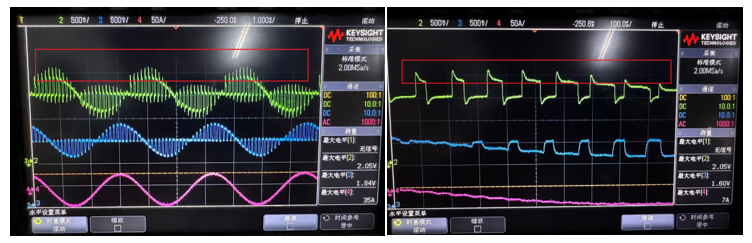
Parasitic inductance causes voltage spikes. This document explains the differences between FeCrAl alloy resistors and Kama alloy resistors, as well as their application scenarios, based on their material properties.
I. Material Composition Differences
① Iron-Chromium-Aluminum Alloy
Base Elements: Based on iron (Fe), the primary additives are chromium (Cr, 15%-30%) and aluminum (Al, 4%-7%). Small trace elements such as cerium (Ce) and zirconium (Zr) may be present. This is an iron-based alloy.
② Kama Alloy
Base Elements: Based on nickel (Ni, approximately 74%), the primary additives are chromium (Cr, 20%), aluminum (Al, 3%), and manganese (Mn, 3%). This is a nickel-based precision resistor alloy.
II. Material Properties
① Iron-Chromium-Aluminum Alloy is a weakly magnetic alloy.
Advantages: Improved oxidation resistance and processing performance, high resistivity, and high-temperature resistance make it advantageous for high-current, high-power products.
Disadvantages: Iron, a weakly magnetic alloy, exhibits magnetic inductance and can easily generate parasitic inductance in high-frequency environments.
② Kama alloy is a non-magnetic alloy.
Advantages: Kama alloy focuses on low resistance, low temperature drift, and high stability. It contains no iron, thus avoiding the effects of magnetic induction.
Disadvantages: Kama alloy resistors are relatively expensive.
III. Comparison of Physical Properties

IV. Application Areas
① Iron-Chromium-Aluminum Alloy Resistors
Core Applications: Industrial heating equipment (electric furnaces, resistance furnaces, electric heaters), high-temperature heating elements (such as ovens, welding equipment), consumer electronic circuits, etc.
Advantages: High-temperature resistance and low cost (iron-based material).
Limitations: Large temperature coefficient of resistance, low precision, unsuitable for precision circuits.
② Karma Alloy Resistors
Core Applications: Precision electronic instruments (multimeters, bridges), strain gauges (sensors), standard resistors, power supply circuits, and high-precision aerospace circuits.
Advantages: Extremely low temperature coefficient (minimal resistance change with temperature), high stability (minimal resistance drift over long-term use), and no magnetic interference.
Limitations: High cost (nickel-based alloy), slightly weak high-temperature performance (recommended operating temperature ≤ 500°C).
V. Selection Differences
Fe-Cr-Aluminum Alloy: Suitable for high-temperature heating, low cost, and oxidation resistance, such as industrial furnaces and heating wires.
Kama alloy: Suitable for high precision, low temperature coefficient, corrosion resistance, and no magnetic interference, such as precision resistors, sensors, and standard measuring instruments.
The core difference between the two is that Fe-Cr-Aluminum Alloy focuses on high-temperature heating performance, while Kama alloy focuses on resistor stability and precision. A comprehensive evaluation should be made based on the temperature, precision, and environmental requirements of the specific application.
VI. Fe-Cr-Aluminum Alloy Resistor Failure Case
The module repeatedly generated false alarms when using Fe-Cr-Aluminum alloy resistors for busbar current detection. Replacing the Kama alloy resistors eliminated the false alarms. This is due to the magnetic properties of Fe-Cr-Aluminum, which can cause interference in a very small number of circuits in AC circuit applications. Optimizing the Kama alloy solves this problem. Kama material offers more stable performance. After upgrading and optimizing the Kama material, the product is free of magnetic interference and has a more stable TCR temperature drift.
*** If you would like to learn more about our products or solutions, or their application in specific scenarios, please feel free to contact us for technical support.
Alloy Resistor: The Current Sentinel Guarding Battery Safety
Layout design for parallel use of Kelvin structure resistors
Related Article
In industrial control, power modules, servo drives, and other high-precision, high-power applications, the stability, accuracy, and mounting compatibility of resistors directly determine equipment operating performance.
HoVB (4026) Bare Alloy Resistor Series with Outward-Folded Leads

Power modules serve as the core power-supply units for a broad range of electronic equipment, encompassing switch-mode power supplies (SMPS), DC-DC converter modules, industrial power supplies, server power supplies, adapter power supplies, and other similar categories. These modules are typically subject to challenging operating conditions, including high-frequency switching, load-step transients, inrush-current surges, and wide-temperature-range operation.
Applications of Alloy Resistors in Power Supply Modules

Non-inductive resistors are a special type of resistive device that, through specialized structural design, reduce their parasitic inductance (inductive reactance) to an extremely low, negligible level.
Overview of Non-Inductive Resistor Technology

Alloy resistors are precision power resistors that utilize Manganin, Constantan, or Nichrome alloys as the resistive element. They are characterized by low TCR, high precision, high current handling capability, and low resistance values.
Core Discrepancies Between Exposed Alloy Resistors and Encapsulated Alloy Resistors