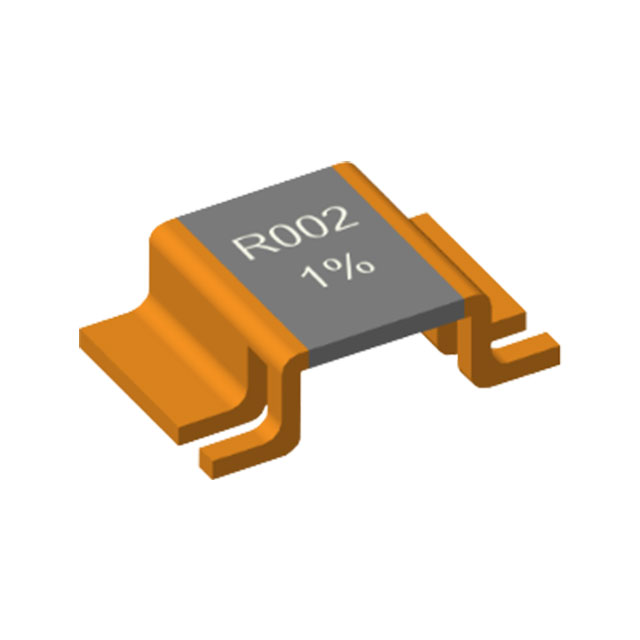
Alloy Resistors for HVAC Applications – Performance and Reliability
① Industry Application Background
Air conditioners are high-power household appliances designed for continuous long-term operation. The system comprises multiple critical circuits, including switch-mode power supplies, compressor variable-frequency drives, fan drive circuits, PFC (Power Factor Correction) stages, auxiliary heating, and overcurrent protection. During operation, the equipment is subject to demanding conditions characterized by significant temperature fluctuations, frequent mode switching, high transient inrush currents, and severe temperature/humidity differentials between indoor and outdoor units. Conventional carbon film and metal film resistors—with their inherent limitations of high TCR, poor surge withstand capability, and inadequate current stability—are unable to meet the stringent requirements of high-precision current sensing and long-term operational reliability demanded by modern air conditioning systems.
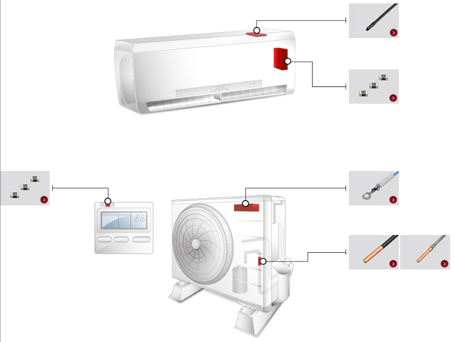
With a compelling combination of low TCR, high accuracy, low inductance, high power capacity, surge tolerance, and exceptional load stability, alloy resistors have become the essential building block for current sensing, power monitoring, and overcurrent protection in HVAC circuits. From inverter compressor loops and main power lines to fan control circuits, they are trusted in critical applications throughout the system—delivering the precision and reliability that underpin energy efficiency, fault protection, and intelligent control in today's air conditioners.
② Core Features – Alloy Resistors Engineered for HVAC Demands
HVAC‑grade alloy resistors are predominantly milliohm‑level, high‑power components, available in a range of package styles—including SMD, vertical through‑hole, horizontal through‑hole, and bare‑chip/open‑frame types—to suit diverse design requirements. Engineered to withstand the rigors of air conditioning applications, their core features are outlined below and fully aligned with home appliance industry standards.



-
Low TCR / High Stability: Manufactured from manganese‑copper (MnCu), iron‑chromium‑aluminum (FeCrAl), and nickel‑chromium (NiCr) alloys, these resistors offer a Temperature Coefficient of Resistance (TCR) as low as 10 to 40 ppm/°C. Within the wide HVAC operating temperature range of –40°C to +125°C, resistance drift is minimized, effectively eliminating sampling data deviations caused by temperature fluctuations and ensuring precise temperature control and power regulation accuracy.
-
High-Precision Current Sensing: Available in standard tolerances of ±1%, ±0.5%, and ±0.2%, with a load stability as tight as 0.02%, these resistors enable accurate current measurement for compressors and fan motors, providing reliable, high‑integrity data to support MCU‑based intelligent control algorithms.
-
High-Current Capability with Superior Surge Tolerance: The milliohm‑level low‑resistance design supports continuous high‑current operation and withstands start‑up transient inrush currents. Excellent pulse load capability makes these resistors ideally suited to the frequent start‑stop cycles and mode‑switching conditions characteristic of HVAC systems.
-
Low Inductance for High-Frequency Performance: With parasitic inductance below 3 nH, these resistors are fully compatible with high‑frequency switch‑mode power supplies and inverter circuits, ensuring distortion‑free signal transmission and immunity to high‑frequency interference—critical for stable variable‑frequency drive performance.
-
Superior Environmental Robustness: Qualified to AEC‑Q200, RoHS, and REACH standards, these resistors exhibit excellent resistance to high humidity, elevated temperatures, and mechanical vibration. They maintain stable performance over extended continuous operation without premature aging or failure, meeting the long‑term reliability requirements of home appliance applications.
③ Application Differences: Alloy Resistors vs. Conventional Resistors
| Comparison Matrix | Conventional Carbon/Metal Film Resistors | HVAC‑Grade Alloy Resistors | Key Differences / Application Notes |
| TCR | 100~500ppm/℃ | 10~40ppm/℃ | Alloy resistor exhibits no significant current-sensing deviation under HVAC temperature cycling conditions. |
| Resistance Range | Primarily high-resistance values | 0.05 mΩ ~ 500 mΩ low-resistance range | Optimized for high-current sensing loops with minimal voltage drop and no additional power dissipation |
| Surge Withstand Capability | Weak / Susceptible to overload burn‑out | High / Withstands transient high-current surges | Optimized for HVAC start-up inrush and load-change conditions |
| Core Application | Voltage division, current limiting, signal conditioning | Current sensing, overcurrent protection,power detection | Alloy resistors are the preferred choice for critical power loops in HVAC systems |
① Core Application Scenarios in Inverter Air Conditioners (Mainstream Models)
Inverter air conditioners represent the primary application domain for alloy resistors. The entire system relies on precision current sensing to enable compressor variable-frequency speed control, energy efficiency regulation, and fault protection. The core application nodes are organized into four main modules:
- Compressor Inverter Drive Circuit
This circuit is the core power stage of the inverter air conditioner. The alloy resistor is connected in series with the inverter DC bus or the motor phase line, providing real-time current sensing for the compressor and transmitting the data to the main control MCU. Based on the current feedback, the MCU dynamically adjusts the compressor operating frequency to achieve precise temperature control and energy-efficient operation. Simultaneously, it monitors abnormal conditions such as overload, rotor lock, and phase loss, triggering rapid shutdown protection to prevent compressor burn-out.
Selection Criteria: High-power SMD alloy resistors or bare-chip alloy resistors are recommended, with resistance values of 10–50 mΩ, power rating of 2–5 W, tolerance of ±1%, and low TCR ≤ 20 ppm/°C—suitable for continuous high-current and high-frequency operation.
- PFC Power Correction Circuit
The PFC circuit in air conditioning systems improves grid utilization and reduces harmonic distortion. The alloy resistor samples the operating current of the PFC inductor, working in conjunction with the control loop to enable dynamic power factor correction. This ensures stable power supply, reduces grid-side losses, and supports compliance with appliance energy efficiency standards. This circuit operates continuously with significant temperature rise, imposing stringent stability requirements on the resistor.
Selection Criteria: Horizontal through-hole or SMD alloy resistors are recommended, with resistance values of 5–20 mΩ, power rating of 2–3 W, high-temperature tolerance, low aging characteristics, and resistance drift ≤ 0.5% under long-term full-load operation.
- Indoor/Outdoor Fan Drive Circuit
In the fan speed control circuits for both indoor and outdoor units, the alloy resistor senses the fan operating current to enable stepless speed regulation, while simultaneously monitoring fault conditions such as fan lock, overload, and no-load operation—triggering timely protection to prevent fan motor burn-out. Fan drive circuits are subject to frequent mode switching, demanding excellent fatigue resistance and surge tolerance from the resistor.
Selection Criteria: Standard SMD alloy resistors are recommended, with resistance values of 20–100 mΩ, power rating of 1–2 W, tolerance of ±1%—offering high cost-effectiveness and suitability for high-volume production.
- Main Power Supply Overcurrent Protection
The alloy resistor is connected in series at the input and output terminals of the switch-mode power supply to sense the total operating current of the air conditioner. In the event of abnormal conditions such as short circuits, overloads, or leakage currents, the resulting current transient is precisely captured, triggering system-level power shutdown protection to safeguard the air conditioner control board and ensure electrical safety.
② Application Scenarios in Fixed‑Speed Air Conditioners
Unlike their inverter counterparts, fixed‑speed air conditioners do not incorporate variable‑frequency speed control. Consequently, alloy resistors in these systems are primarily deployed in power supply protection, fan control, and auxiliary electric heating circuit detection—with their principal functions centered on overload protection and operational status monitoring. Compared to inverter models, the parameter requirements are relatively less demanding, making conventional vertical through‑hole or horizontal through‑hole alloy resistors the preferred choice, offering an optimal balance of cost‑effectiveness and reliability.
③ HVAC Alloy Resistor Selection Guide – Key Parameters & Standards
| Application Circuit | Preferred Package Configuration | Resistance Range | Power Handing Capability | Tolearance | TCR |
| Compressor Inverter Loop | Bare-Chip/High-Power SMD Resistor | 10~50mΩ | 2~5W | ±1% | ≤20ppm/℃ |
| PFC Power Correction | Horizontal Through-Hole/SMD Resistor | 5~20mΩ | 2~3W | ±1% | ≤30ppm/℃ |
| Fan Drive Loop | Standard Chip Resistor 1206 / 2512 | 20~100mΩ | 1~2W | ±1% | ≤40ppm/℃ |
| Power Protection Loop | Vertical Through-Hole/SMD Resistor | 10~30mΩ | 2W | ±1%/±5% | ≤40ppm/℃ |
④ Package Configuration Selection Guidelines
-
SMD Alloy Resistors: Suitable for air conditioner main control boards and high-density PCB layouts. Designed for SMT automated high-volume production, these resistors offer compact footprint and minimal parasitic interference, making them ideal for fan drive circuits and low-power current sensing applications in power supply stages.
-
Horizontal Through‑Hole Alloy Resistors: Featuring a low center of gravity, excellent heat dissipation, and superior vibration resistance, these resistors are well‑suited for outdoor unit PCBs and high‑temperature, high‑vibration operating environments. They deliver low temperature rise and robust stability over extended continuous operation.
-
Vertical Through‑Hole Alloy Resistors: With a minimal PCB footprint, these resistors are the preferred choice for space‑constrained applications, particularly in compact indoor unit circuit boards where board area is at a premium.
-
Bare‑Chip Alloy Resistors: Engineered for extremely high currents and ultra‑low temperature rise, these resistors are specifically designed for high‑power compressor inverter circuits, making them the primary selection for high‑end inverter air conditioners.
III. Application Advantages, Failure Analysis, and Process Specifications
① Key Application Benefits of Alloy Resistors for HVAC Systems
- Enhancing Overall Energy Efficiency of Air Conditioners
The precision current sensing capability of alloy resistors enables the air conditioner MCU to accurately identify load conditions in real time, dynamically adjusting compressor operating frequency and fan speed to eliminate unnecessary power consumption. This significantly improves the system's Energy Efficiency Ratio (EER) while aligning with national appliance energy efficiency standards and reducing end-user power consumption.
- Strengthening System Fault Protection
Air conditioners are susceptible to voltage fluctuations, abrupt load changes, fan lock, and compressor rotor lock during operation. Alloy resistors capture abnormal current transients within milliseconds, rapidly triggering overcurrent, overload, and short-circuit protection to isolate fault circuits with precision. This prevents catastrophic failures of the compressor, power devices, and main control IC, substantially reducing the product return and repair rate.
- Designed for Harsh Continuous Operating Conditions
Indoor and outdoor units of air conditioning systems are exposed to high humidity, significant temperature fluctuations, and moderate vibration, operating continuously throughout the year. Alloy resistors exhibit excellent heat resistance, anti-aging characteristics, vibration resistance, and minimal TCR—maintaining exceptional long-term resistance stability over extended operation. They do not suffer from sampling failure or parameter drift due to environmental variations, ensuring consistent year-round system performance.
- Supporting Cost-Effective High-Volume Production
Alloy resistors are available in a wide variety of package configurations and comprehensive parameter options, covering both high and low power scenarios across the full application spectrum. They are compatible with both SMT automated assembly and through-hole manual/automated production processes. With controllable batch procurement costs, long service life, and extremely low failure rates, they effectively reduce both manufacturing and after-sales maintenance costs for air conditioner OEMs.
② Common Failure Modes in HVAC Circuits and Corresponding Solutions
| Common Failure Mode | Root Cause | Optimized Solution |
| Sampling data drift / Inaccurate temperature control | High TCR of conventional resistors causing resistance shift under elevated temperatures | Replace with alloy resistor (TCR ≤ ±40 ppm/°C) for unified high‑precision specification |
| Resistor burn‑out due to inrush current | Insufficient power margin / Poor pulse withstand capability | Apply 70% power derating; select surge‑tolerant alloy material |
| Long‑term aging failure in outdoor units | Parameter drift and oxidation caused by high temperature & high humidity | Adopt automotive‑grade (AEC‑Q200) moisture‑resistant, anti‑aging alloy resistors with horizontal mounting for enhanced heat dissipation |
| Signal interference in high‑frequency operation | Excessive parasitic inductance of the resistor | Employ low‑inductance alloy resistors; optimize PCB layout and grounding |
③ Manufacturing and Layout Process Specifications
-
Power Derating Specification: Under high-temperature operating conditions typical of air conditioning applications, the actual operating power of all alloy resistors shall not exceed 70% of the rated power, ensuring sufficient thermal margin to prevent long-term degradation caused by elevated temperatures.
-
Layout and Thermal Management Specification: High-power alloy resistors must be placed away from heat-sensitive components such as capacitors, ICs, and wiring harnesses, with a minimum clearance of 3 mm for heat dissipation. Horizontal mounting is recommended for outdoor unit PCBs to enhance heat dissipation and vibration resistance.
-
Soldering Process Specification: SMD resistors are compatible with standard reflow soldering processes, while through-hole resistors are compatible with wave soldering. Prolonged high-temperature exposure during soldering must be avoided to prevent damage to the resistor body, ensuring full, void‑free solder joints.
-
Current‑Sensing Routing Specification: Kelvin (four‑terminal) routing is recommended for high‑precision current‑sensing loops to minimize voltage drop interference from lead resistance, further enhancing current sensing accuracy.
④ Conclusion
Alloy resistors are a core functional component of air conditioning control systems. Unlike conventional resistors, which are limited to basic current limiting and voltage division, alloy resistors deliver the precision, low TCR, high current capability, and reliability required for critical functions—including current sensing, energy efficiency optimization, and fault protection. They directly impact temperature control accuracy, energy savings, and equipment service life. When selecting resistors for air conditioning designs, it is essential to match package type and electrical parameters to the specific operating conditions, power requirements, and space constraints of each application. Following proper derating and layout guidelines ensures stable, efficient, and long-term system performance.
Compliance Statement: All alloy resistors covered in this document are RoHS and REACH compliant. Selected high-end models also meet AEC‑Q200 automotive-grade standards, making them fully suitable for manufacturing and export in the home appliance industry.

HoYLR2512 — Newly Launched High-Stability Anti-Sulfurated Encapsulated Alloy Resistor
HoTo263A Series – High-Power Thick-Film Resistors with Wide Resistance Range
Related Article