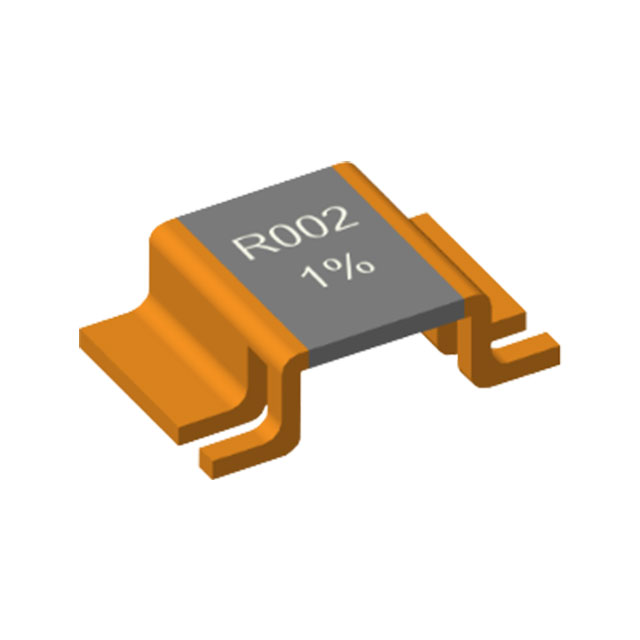
Understanding Sampling Resistors in One Article
author: Milliohm Electronics
2026-03-13
This article will comprehensively analyze the core knowledge of sampling resistors from four dimensions: definition, types, application scenarios, and the advantages of using alloy resistors as sampling resistors.
I: Definition of Sampling Resistor
A sampling resistor, also known as a sensing resistor or detection resistor, is essentially a special type of resistive element with high-precision resistance characteristics. Its core function is to extract weak signals related to the measured current or voltage from the circuit through the principle of voltage division or current shunting. These signals are then processed by a subsequent amplifier, ADC (analog-to-digital converter), or microcontroller to achieve quantitative analysis and control of the target parameter.
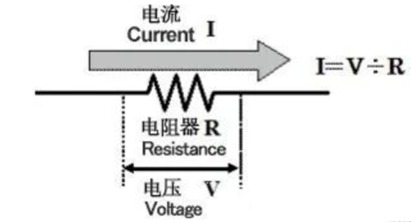
Its working principle is based on Ohm's Law (U=IR): For current sampling, a low-resistance sampling resistor is connected in series in the circuit under test. By measuring the voltage drop across the resistor, the magnitude of the circuit current can be deduced. For voltage sampling, the sampling resistor is connected in parallel with the circuit under test or forms a voltage divider circuit to proportionally attenuate the high voltage into a measurable low-voltage signal. Unlike ordinary resistors, sampling resistors place greater emphasis on resistance accuracy, temperature stability, and power handling capacity to meet the demands of demanding measurement scenarios.
II. Classification of Sampling Resistors
Sampling resistors can be classified according to the object being measured, their structural form, and their material. Different types have different focuses in terms of performance, resistance range, and application scenarios. The core classifications are as follows:
Sampling resistors can be classified according to the object being measured, their structural form, and their material. Different types have different focuses in terms of performance, resistance range, and application scenarios. The core classifications are as follows:
①. Classification by Measurement Object
①-1: Current Sampling Resistor: Primarily used to detect the current intensity in a circuit. It is usually connected in series in the load circuit, and its resistance value is mostly in the milliohm to ohm range to avoid significantly affecting the original circuit's operating conditions.
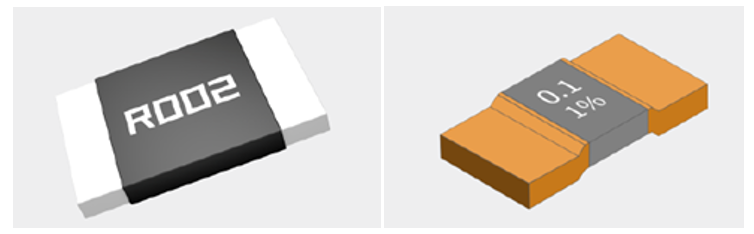
Two-Terminal Current Sampling Resistor: Simple in structure, connected to the circuit only through two pins. Its resistance range is mostly 10Ω~100Ω. It has low manufacturing cost and is easy to install, but its accuracy is slightly lower. It is suitable for low-current, low-cost scenarios, such as small chargers and consumer electronics.

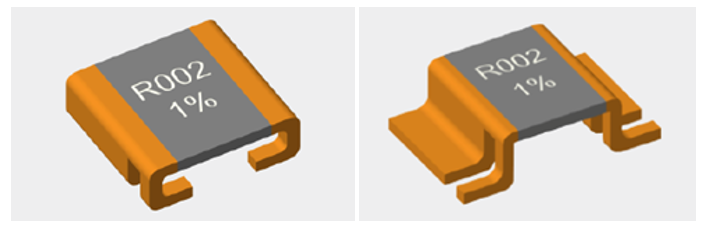
Four-terminal current sampling resistor: Utilizing a four-pin structure, it separates the current terminal from the voltage detection terminal, effectively reducing measurement errors caused by contact resistance. It boasts high precision and low temperature drift, with a resistance range of 0.01Ω~1Ω. Suitable for high-current, high-precision applications, such as industrial power supplies and motor drive circuits.
①-2: Voltage sampling resistor: Primarily used to measure voltage amplitude. It adapts to the measuring instrument's range using a voltage divider principle, offering a wide resistance range.
Voltage divider sampling resistor: Typically with a resistance of 1kΩ~10kΩ, it divides the voltage in series with the circuit under test, proportionally attenuating high voltages and maintaining high measurement accuracy. Suitable for high-precision voltage measurement applications.
Current-limiting sampling resistor: With a resistance of 0.01Ω~1Ω, it combines current limiting and sampling functions. It limits the maximum current in the circuit to prevent component damage and uses voltage drop to infer current, resulting in a fast response speed. Suitable for high-voltage power supplies and power electronic equipment.
②. Classification by Material
②-1: Thick-film sampling resistors: These use metal oxide paste sintering to form a conductive path. The technology is mature and inexpensive, suitable for consumer products with low requirements for accuracy and stability. However, they have a high temperature coefficient (±100~200ppm/℃), lower accuracy, and generally poor long-term stability.
②-2: Alloy sampling resistors: These use alloys such as manganin, constantan, and nickel copper as materials. They are available in pure alloy, molded alloy, and metal foil types. They offer advantages such as low resistance, high accuracy, and low temperature drift, making them suitable for high-end precision applications.
III. Application Scenarios of Sampling Resistors
As "sensing elements" for signal detection, sampling resistors are used across all areas of electronic equipment. Key applications include:
As "sensing elements" for signal detection, sampling resistors are used across all areas of electronic equipment. Key applications include:
① Power Management: In switching power supplies and DC-DC converters, they are used for output current detection and overcurrent protection. By sampling the current signal in real time, they regulate the stability of the output voltage and prevent circuit damage due to overload, making them crucial for the reliable operation of power modules.
② Battery Management System (BMS): Used for monitoring battery charging and discharging current and metering capacity. Accurately collecting current data to estimate remaining capacity and control the charging and discharging rate ensures battery safety and lifespan. Widely used in new energy vehicles, mobile power supplies, and energy storage devices.
③ Motor Drive: In servo motors, frequency converters, and robot joint drive circuits, they sample phase current signals and feed them back to the controller to achieve closed-loop control of motor speed and torque, improving drive accuracy and stability.
④ Industrial and Automotive Electronics: Used in industrial automation equipment for process parameter monitoring, and in automotive electronics (such as EPS systems and oil pump control) for applications requiring tolerance to harsh environments ranging from -55℃ to 155℃, enabling accurate current detection and safety protection. Some products require AEC-Q200 certification.
⑤ Precision Instruments and Medical Equipment: High-precision sampling resistors are required in electron microscopes, automated test equipment (ATE), and medical monitors to ensure the accuracy of measurement data.
IV. Advantages of Alloy Resistors as Sampling Resistors
In applications requiring high precision, high current, and high stability, alloy resistors offer overwhelming advantages over ordinary resistors such as thick-film resistors. These advantages are primarily reflected in the following five points:
① Extreme Temperature Stability: Alloy resistors utilize precision alloy materials such as manganin, constantan, nickel copper, and kamma, achieving a temperature coefficient (TCR) controllable within ±5~100ppm/℃, with top-tier products even reaching ±5ppm/℃. The resistance changes linearly and only slightly with temperature. In contrast, thick-film resistors have a TCR of ±100~250ppm/℃, making them prone to measurement errors due to temperature drift. This advantage ensures sampling accuracy across a wide temperature range.
② Higher Power Handling and Heat Dissipation Capacity: Alloy resistors use copper electrodes for conductivity, resulting in uniform heat generation and high thermal conductivity. Combined with optimized packaging design, their power density per unit volume far exceeds that of thick-film resistors. For example, a 1206 packaged alloy resistor can handle 1~2W of power, while a similarly packaged thick-film resistor only handles 0.25~0.5W. This allows them to withstand greater current surges and prevents damage from localized overheating.
③ High Precision and Long-Term Stability: Alloy resistors generally achieve a precision of 0.1%~1%, with some even reaching 0.01%. Furthermore, the alloy material has stable chemical properties, strong resistance to oxidation and corrosion, and minimal resistance drift after long-term operation. In contrast, thick-film resistors are prone to oxidation and crystallization, leading to resistance changes. This makes them suitable for applications with extremely high reliability requirements.
④ Excellent Shock Resistance and Safety Performance: The bulk alloy structure has a high melting point and good mechanical strength, capable of withstanding short-term high-current surges (such as short circuits and motor startup). Failure modes are gradual and predictable. Thick-film resistors, with their thin film layers, are easily burned out or open-circuited due to instantaneous overload, posing a risk of system malfunction.
⑤ Superior High-Frequency Characteristics: Low-resistance alloy resistors employ a linear structure with extremely low parasitic inductance. Some products are equipped with four-terminal Kelvin connections, eliminating lead inductance errors and enabling stable operation in high-frequency circuits from hundreds of kHz to MHz. This makes them ideal for switching power supplies and high-frequency motor drives.
V. Summary
Although sampling resistors are fundamental components, their selection directly determines the measurement accuracy and system reliability of the circuit. By definition, they are the core hub of signal conversion; in terms of type, corresponding products must be matched according to current/voltage requirements and accuracy levels; in terms of application, they have permeated every core circuit of electronic devices; and alloy resistors, with their material and structural advantages, have become the top choice for high-end applications.
If you would like to learn more about our products or solutions, or their application in specific scenarios, please feel free to contact our technical support.
FL2 vs FL3T Shunt: Key Feature Differences
Application of alloy resistors in lighting
Related Article
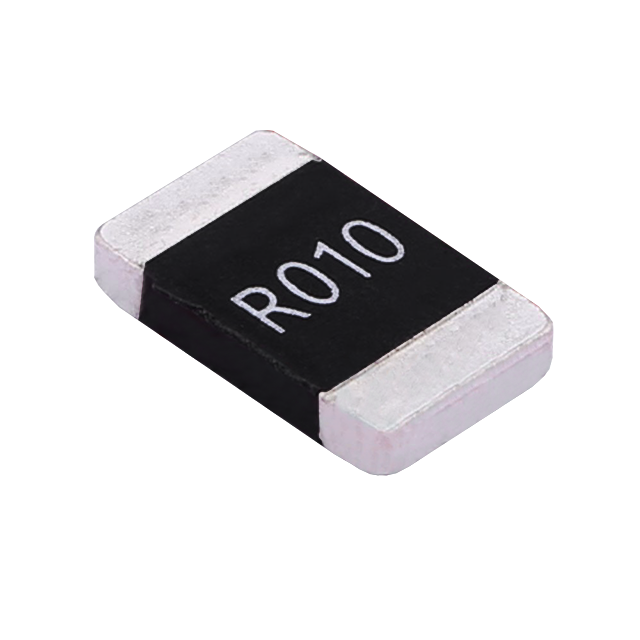
Key performance features: high power handling, ultra-low temperature drift, high overload withstand capability, low inductance at high frequency, and automotive-grade high reliability.
HoCG4527 Automotive Grade Molded Alloy Resistor
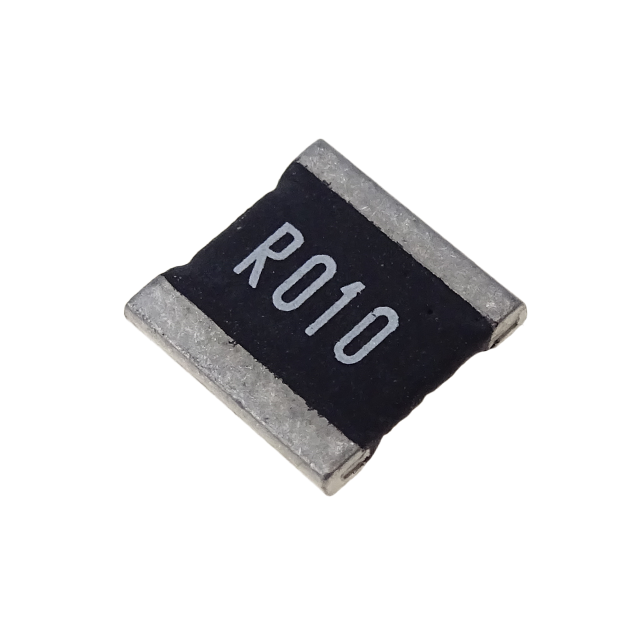
Key features: ultra-high current-carrying capability, ultra-high stability, ultra-low temperature drift, and low inductance at high frequency.
HoCG2728 Automotive Grade Molded Alloy Resistor

Alloy resistors, with their unique technical advantages—ultra-low resistance, low temperature drift, high power handling, low parasitic parameters, and strong pulse withstand capability—have become core components in current sensing, overload protection, and load matching circuits for EV charging stations.
Alloy Resistor Applications in New Energy