The application principles and specific methods of constantan wire and manganese copper wire resistors in induction cookers
author: Milliohm Electronics
2025-06-30

1. Current detection principle
The induction cooker achieves power control, pot detection and overload protection by sampling the main circuit current. There are two ways of current sampling:
- Indirect sampling:
induction current changes through current transformers or Hall elements, converted into voltage signals;
- Direct sampling:
Position: connected in series between the emitter of the IGBT tube and the ground (partial design is connected in series to the rectifier output circuit)
Principle: When the current flows through the constantan wire, a small voltage drop is generated (formula: V = I × R), which is amplified by the operational amplifier and sent to the microcontroller for real-time current monitoring.
Advantages: low cost, simple structure, it is the mainstream solution
Principle: When the current flows through the constantan wire, a small voltage drop is generated (formula: V = I × R), which is amplified by the operational amplifier and sent to the microcontroller for real-time current monitoring.
Advantages: low cost, simple structure, it is the mainstream solution
2. Design implementation method
- Resistance calculation and power consumption control
Example: 1800W induction cooker (220V input), working current is about 8.18A. If 3 parallel constantan wires (single length 15mm, diameter 0.59mm) are used, the total resistance is about 0.011Ω, and the voltage drop is about 90mV28.
Power consumption limit: Too large resistance will cause serious heating (power consumption formula: P = I²R), and it is necessary to balance sampling accuracy and temperature rise.
- Structural design optimization
Space utilization: The main body of the constantan wire is designed as an arc or serpentine bend (non-straight line), which increases the effective length in the limited PCB space and improves the resistance value.
- Signal processing circuit
Amplification circuit: The millivolt signal output by the constantan wire needs to be amplified by an op amp (such as LM358) and then input into the ADC pin of the microcontroller.
Calibration adjustment: Correct power deviation and adjust current detection reference through adjustable resistor (such as VR1, 0-500Ω)
3. Typical faults and maintenance points
- Common faults
Poor solder joint/open circuit: causes current detection failure, manifested as no heating, intermittent heating or power abnormality.
Resistance value offset: sampling accuracy is affected by oxidation or mechanical deformation, and cleaning or replacement is required.
- Substitution principle
Prohibit copper wire: copper has a high resistance temperature coefficient, which will cause current detection inaccuracy and may cause power outage.
Special replacement: remove the copper wire from the old multimeter, and keep the same length and wire diameter
4. In conclusion: Technical advantages
The application of constantan wire/manganese copper wire in induction cookers embodies the classic design of "solving engineering problems with material properties"
- Low temperature coefficient → Ensure sampling stability in the entire temperature range;
- Milliohm resistance → Take into account current carrying capacity and power consumption control;
- Structural adaptation design → Improve space utilization and consistency through bending/limiting
- Maintenance tips: 90% of constantan wire failures are caused by cold soldering. When repairing, first repair soldering and clean the oxide layer

The application principle and specific method of bare alloy resistors in two or three wheeled vehicles
HoJLR1206 & HoJLR2512 : How to use in soybean milk machines/egg beaters/shavers/hook-up air conditioners/household floor scrubbers/sweepers and their functions
Related Article
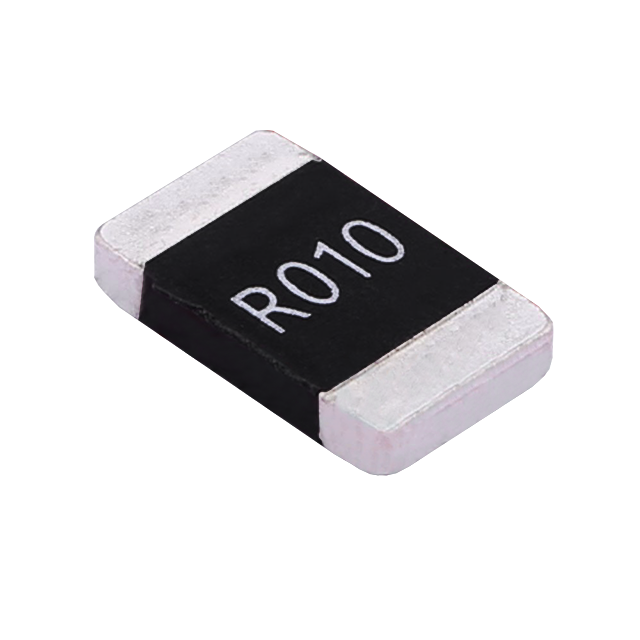
Key performance features: high power handling, ultra-low temperature drift, high overload withstand capability, low inductance at high frequency, and automotive-grade high reliability.
HoCG4527 Automotive Grade Molded Alloy Resistor
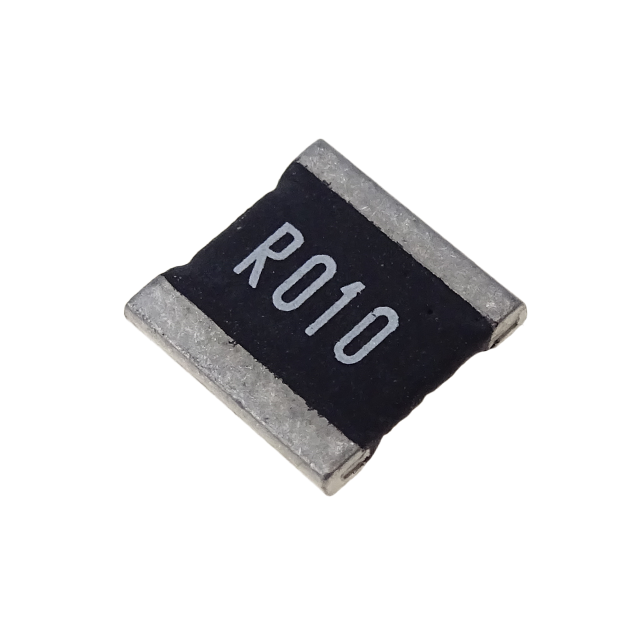
Key features: ultra-high current-carrying capability, ultra-high stability, ultra-low temperature drift, and low inductance at high frequency.
HoCG2728 Automotive Grade Molded Alloy Resistor

Alloy resistors, with their unique technical advantages—ultra-low resistance, low temperature drift, high power handling, low parasitic parameters, and strong pulse withstand capability—have become core components in current sensing, overload protection, and load matching circuits for EV charging stations.
Alloy Resistor Applications in New Energy