Comparison of Differences Between Milliohm Busbars and 0-Ohm Resistors
One is designed for high-current carrying capacity, while the other focuses on circuit adaptation. The fundamental design philosophies of busbars and 0-ohm resistors dictate their vastly different application directions, which is the root of all their differences.
Busbars: The "Power Highway" for High Current with Low Loss
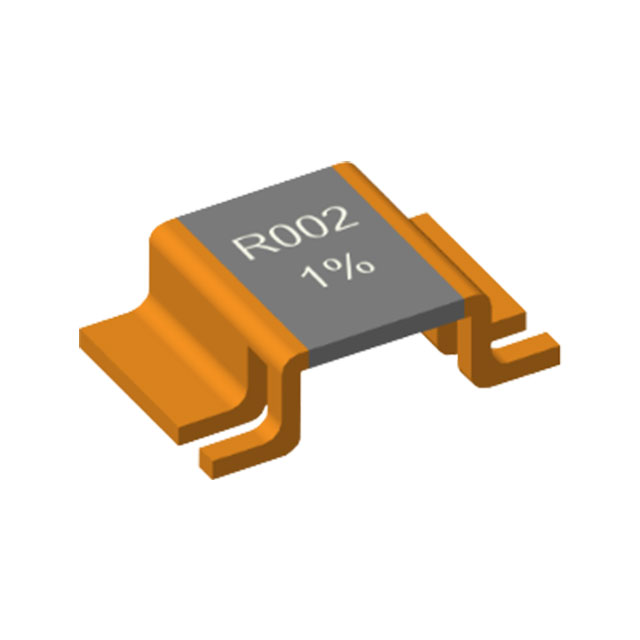
A busbar, also known as a copper or aluminum bar, is essentially a conductor with a large cross-sectional area. Its design core is to minimize losses during high-current transmission and enhance current-carrying capacity. Specializing in high-power, high-current power transmission, it acts as the "main power highway" in a circuit, responsible for efficiently delivering large currents from the power source to the load. Busbars are commonly found in high-power applications such as new energy systems, energy storage, and industrial power supplies.
0-Ohm Resistors: The "Multifunctional Connector" for Circuit Adaptation
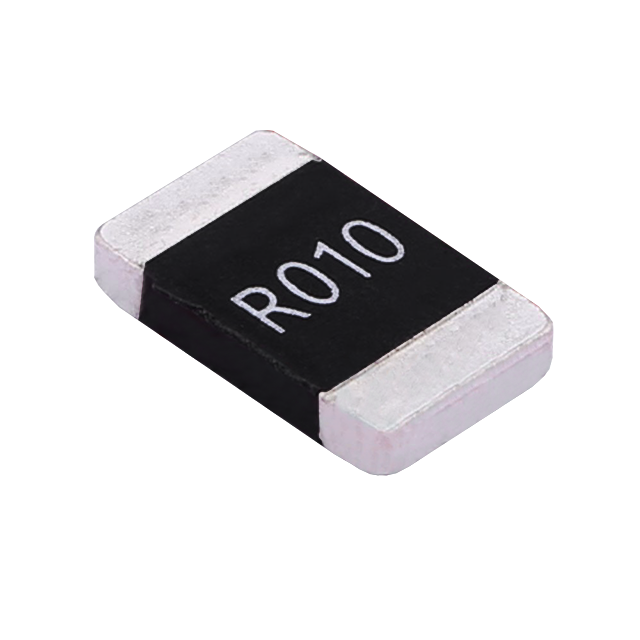
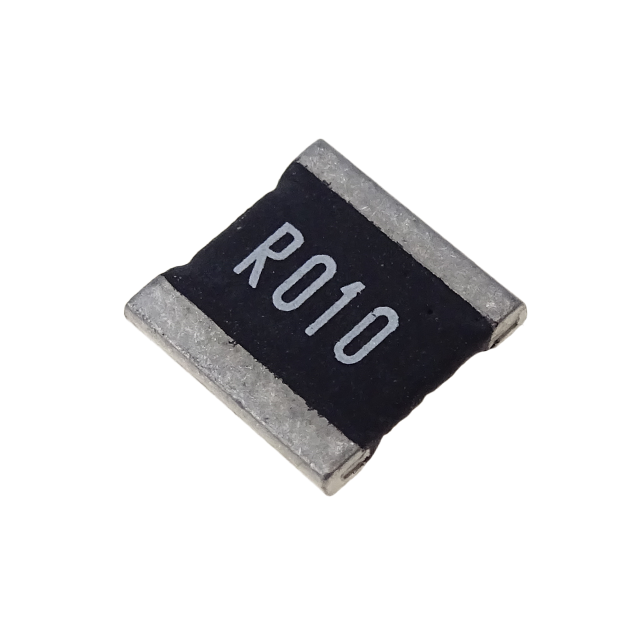
A 0-ohm resistor is a chip resistor with resistance approaching zero, falling under the category of resistor-type electronic components. Its design core is to achieve circuit connections and functional adaptation within low-current loops, and it is not intended for high-current carrying capacity. Functioning as a "micro-channel" or "jumper" in a circuit, it addresses detailed issues such as circuit layout, signal isolation, and inrush current limiting. 0-ohm resistors are commonly used in consumer electronics, precision control systems, and low-power circuit boards.
II.Technical Differences
From current-carrying capacity and conductive losses to structural characteristics and application value, the differences between busbars and 0-ohm resistors span key dimensions of circuit design. A detailed comparison is as follows:
① Current-Carrying Capacity
Busbars utilize highly conductive materials such as copper and aluminum. By increasing the cross-sectional area and optimizing the structure, their current-carrying capacity is enhanced. Standard specifications can handle high currents ranging from tens to thousands of amperes. Customized busbars used in new energy storage and charging pile applications can even withstand instantaneous currents of tens of thousands of amperes, making them perfectly suited for high-power transmission requirements.
② Conductive Loss
The core value of a busbar lies in its low-loss conductivity. Its large cross-sectional area reduces current density (J=I/S). Combined with the low resistivity of copper or aluminum, it significantly minimizes Joule heating losses (P=I²R) during current transmission. This ensures no significant heat generation or energy loss during high-current transmission, which is the fundamental reason busbars are indispensable in high-power applications.
Although the resistance of a 0-ohm resistor approaches zero, it still possesses a minute inherent resistance (typically in the mΩ range). Due to its small cross-sectional area, the current density is higher, resulting in minor losses during current transmission. This loss is not a design flaw but can, in specific scenarios, serve auxiliary functions such as mild current limiting or overcurrent protection.
③ Structure and Form Factor
A busbar is a customized structural component with no fixed specifications. Its shape—such as straight bars, bends, or multi-layer stacks—can be designed according to the circuit layout and installation space. Materials are typically bare copper (often tin or nickel-plated) or aluminum alloy, with dimensions ranging from a few millimeters to several meters. Some high-power busbars may also integrate heat sinks or insulating sleeves.
A 0-ohm resistor is a standardized electronic component that follows chip resistor packaging specifications. Common package sizes include 0402, 0805, 1206, and 2512. Their compact size allows for direct surface mounting on printed circuit boards, making them compatible with automated SMT assembly processes without the need for customization.
④ Thermal Dissipation Characteristics
Due to the high currents they carry, thermal management is a critical aspect of busbar design. The large cross-sectional area itself acts as a natural heat dissipation structure. Furthermore, some high-power busbars enhance cooling by adding dedicated heat sinks, integrating liquid cooling channels, or increasing the surface area, ensuring the temperature remains within a safe range during prolonged high-current operation.
As a small surface-mount device, a 0-ohm resistor has no dedicated thermal design and relies solely on its minuscule surface area for natural cooling. Its package limitations prevent rapid heat dissipation. Consequently, if the rated current is exceeded, it will overheat and fail quickly, which is a key reason it cannot handle high currents.
III. Selection Criteria
Selecting between a busbar and a 0-ohm resistor involves no complex calculations. The decision hinges on two primary factors: the current magnitude and the specific application requirements. The guiding principle can be succinctly stated as: Employ busbars for high-current power distribution and 0-ohm resistors for low-current circuit adaptation. The following outlines the appropriate scenarios for each:
* Three Typical Applications for Busbars
① High-Power Energy Transmission: This includes applications such as fast-charging circuits (60A~200A) in EV charging piles, inter-tier connections (100A~500A) in energy storage battery clusters, high-current drives in industrial VFDs, and DC-side high-current transmission in photovoltaic inverters.
② Internal High-Current Interconnections: Used for internal power pathways within high-current equipment like EV battery packs, high-power UPS systems, welding machines, and electroplating rectifiers.
③ Applications Demanding Minimal Conductive Loss: Critical for systems where transmission efficiency and thermal management are paramount, such as precision energy storage units and HVDC equipment.
* Four Typical Applications for 0-Ohm Resistors
① PCB Layout Optimization: Employed on circuit boards in consumer electronics (e.g., smartphones, PCs), smart home devices, and small controllers to facilitate cross-layer routing or connect different copper pour areas.
② Signal Ground Isolation: Used for low-current connections to separate digital from analog grounds, or high-frequency from low-frequency signal returns, thereby minimizing crosstalk and noise.
③ Low-Current Protection: Acts as a fusible link for overcurrent protection in low-current paths powering components like sensors, small ICs, or indicator LEDs.
④ Design Flexibility and Debugging: Placed as reserved pads during the product development and prototyping stages, allowing for circuit path modifications without requiring a PCB respin, thus reducing costs.
IV. Conclusion
Although both busbars and 0-ohm resistors serve as conductive interconnects in circuits, one is a "power highway" engineered for high currents, while the other is a "multifunctional micro-channel" designed for low-current applications. They possess fundamental and insurmountable differences in current-carrying capacity, functional positioning, and application scenarios, rendering them absolutely non-interchangeable.
The essence of circuit design lies in precise matching. In high-power, high-current scenarios, forcibly substituting a busbar with a 0-ohm resistor will lead to resistor burnout, circuit shorts, and potentially even safety hazards. Conversely, in low-current precision control scenarios, replacing a 0-ohm resistor with a busbar not only results in cost waste and spatial redundancy but can also introduce issues such as signal interference and layout difficulties.
Only by recognizing the core differences between the two—allowing busbars to handle high-current, low-loss transmission and 0-ohm resistors to manage low-current circuit adaptation—can each component fulfill its designated role. This ensures the circuit not only meets performance requirements but also achieves reliability, cost-effectiveness, and design rationality.

High-Current Sensing Technology and Operating Condition Adaptation Solutions
Analysis of Gold Aluminum Housing Resistor Products
Related Article