Application Cases of Gold-Casted Aluminum Resistors in Automobiles
author: Milliohm Electronics
2026-01-31
I. Core Characteristics of Gold-Casted Aluminum Resistors
High Power Density: The resistor core uses alloy materials such as nickel-chromium and manganese-copper, offering excellent linearity and strong power handling capacity (standard models 10W~500W, customized models can reach over 1000W), suitable for high-current, high-power consumption scenarios;
Excellent Heat Dissipation: The aluminum alloy casing has a high thermal conductivity (≥200W/(m·K)) and is designed with multiple heat dissipation fins. Combined with the metal base, heat can be quickly conducted to the casing or cooling system, resulting in excellent temperature rise control;
High Environmental Adaptability: The casing has good sealing performance (some models have IP65 protection), is vibration-resistant (10~2000Hz, 20g acceleration), and high-temperature resistant (operating temperature -40℃~155℃), making it suitable for harsh industrial environments;
Strong Stability: The alloy resistor core has a low temperature coefficient (TCR) (typical ±50ppm/℃, high-precision models ±20ppm/℃), resulting in small nonlinear errors during long-term operation and no risk of aging failure.
II. New Energy Vehicle Main Unit Control System
Case Background: In the main unit control system of new energy vehicles, a pre-charge resistor needs to be configured in the battery management system (BMS) to prevent the large current during vehicle startup from directly impacting the capacitors and causing component damage. The resistor must be small in size, high in power, have good heat dissipation, and be able to withstand the high-temperature environment of the engine compartment.
Core Requirements: Start-up phase current limiting protection (peak current ≤10A); high temperature resistance; compact size; strong overload capacity to ensure safe and reliable startup.
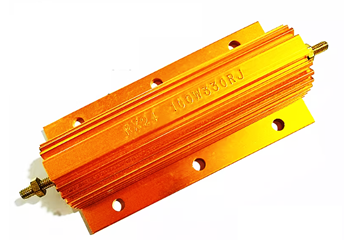
Selection Solution: The RX24 series gold-plated aluminum pre-charge resistor is selected, specifically model RX24-100W/330R (rated power 100W, resistance 330Ω, accuracy ±5%). This model uses an aluminum alloy shell with a gold anodized finish and a heat dissipation groove design, significantly improving thermal conductivity; its insulation withstand voltage reaches 1500V, adapting to the high-voltage environment of the vehicle and perfectly compatible with the compact layout of the control cabinet.
High-power gold-plated aluminum-cased resistor (actual product image)
Application results: Testing showed that during startup, the current was stably controlled within 8A, the capacitor charging time was ≤2 seconds, and there was no damage to components due to inrush current. Under continuous operation at 120℃ in the engine compartment, the resistance value drift was ≤0.5%, demonstrating excellent stability.
III. Application of Pre-charge Resistor in New Energy Vehicle Air Conditioning Systems
Case Background: When developing and setting up control modules for new energy vehicle air conditioning systems, pre-charge resistors are required to limit the inrush current during compressor startup, preventing damage to the compressor controller. This module is installed under the vehicle's cabin in a compact space and must withstand temperatures up to 85℃ and driving vibrations.
Core Requirements: Startup current limiting (inrush current ≤ 5A); withstands 85℃ high temperature and 20g vibration; compact size, easy to install with additional heat sinks.
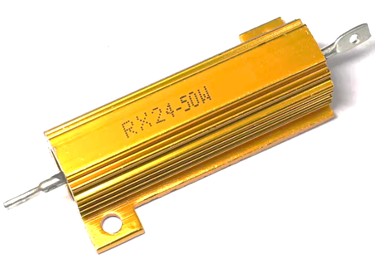
Selection Solution: RX24 series gold aluminum shell resistors are selected, specifically model RX24-50W/15R (rated power 50W, resistance 15Ω, temperature resistance -40℃~155℃). This model features a shell with over 95% aluminum content, a thickness of 3mm, and a surface heat dissipation groove design, allowing for the addition of small heat sinks to enhance heat dissipation; it uses leaded mounting, adaptable to the compact internal layout of the module; and it is lead-free and halogen-free packaged, meeting the environmental protection requirements for automotive electronics.
RX-50W Power Gold Aluminum Shell Resistor - Actual Product Image
Application Effects: The starting current of the air conditioner compressor is stably controlled within 4A, ensuring smooth and shock-free startup; after 1000 hours of continuous testing under 85℃ high temperature and 20g vibration conditions, the resistance performance showed no degradation.
IV. Selection and Adaptation Points
1. Power Matching: All cases follow the selection principle of "actual maximum power consumption × 1.5~2 times". For instantaneous power scenarios such as braking and discharge, overload capacity needs to be additionally confirmed.
2. Environmental Adaptability: For outdoor/vehicle scenarios, prioritize models with IP65 protection and temperature resistance ≥155℃; for scenarios with severe vibration, confirm a vibration resistance level ≥10g.
3. Accuracy Selection: ±5% accuracy is sufficient for industrial braking and discharge scenarios; for testing and audio scenarios, select high-precision models with ±1%~±2%.
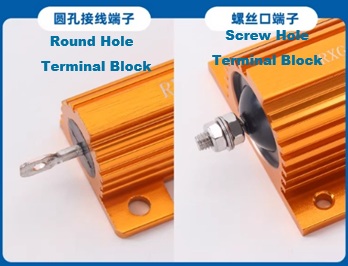
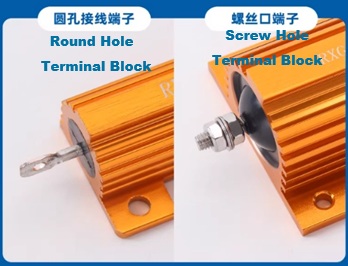
4. Installation Method: Round hole lead wire installation (5~60W), bolt installation (>75W), customized installation method.

This document is subject to change without notice. For further information on our products, solutions, or specific applications, please contact our technical support.
Application of alloy resistors in the charging pile industry
Empowering a Green Future: Milliohm JLRC Automotive-Grade Alloy Resistors
Related Article
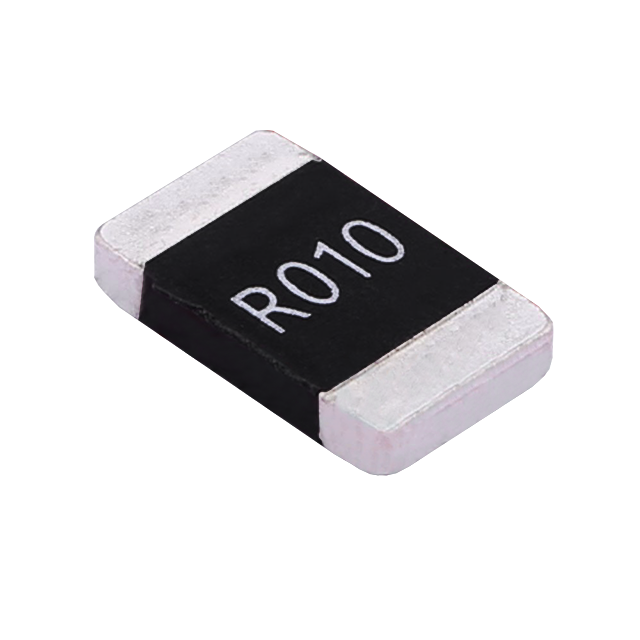
Key performance features: high power handling, ultra-low temperature drift, high overload withstand capability, low inductance at high frequency, and automotive-grade high reliability.
HoCG4527 Automotive Grade Molded Alloy Resistor
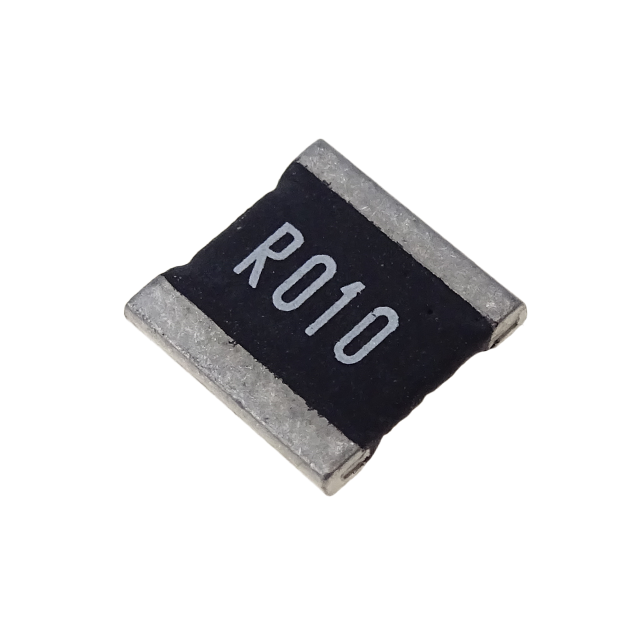
Key features: ultra-high current-carrying capability, ultra-high stability, ultra-low temperature drift, and low inductance at high frequency.
HoCG2728 Automotive Grade Molded Alloy Resistor

Alloy resistors, with their unique technical advantages—ultra-low resistance, low temperature drift, high power handling, low parasitic parameters, and strong pulse withstand capability—have become core components in current sensing, overload protection, and load matching circuits for EV charging stations.
Alloy Resistor Applications in New Energy