Application of Alloy Current Sense Resistors in Automotive Battery Management Systems (BMS)
As a core component of new energy vehicles, the Battery Management System (BMS) carries the important mission of monitoring battery status, ensuring battery safety, and optimizing battery performance. In the critical circuit design of a BMS, the performance of resistor components directly affects the system's accuracy and reliability. Alloy resistors, with their excellent electrical performance and environmental adaptability, have become a core component in key areas of automotive BMS, such as current sensing, temperature compensation, and balancing control. This article will start from the technical characteristics of alloy resistors and elaborate on their typical application scenarios and advantages in automotive BMS.
1.Technical Characteristics and Selection Criteria of Alloy Resistors
1-1.Core Performance Indicators
a.High Precision and Low Temperature Coefficient: Alloy resistors are typically made from nickel-chromium (NiCr), copper-manganese (CuMn), or Karma alloys through precision machining. Their Temperature Coefficient of Resistance (TCR) can be controlled to below ±5ppm/°C, which is much lower than that of ordinary carbon film or metal film resistors. For example, Milliohm Electronic's HoLRS series of bare CuMn alloy resistors can achieve a resistance change rate of 0.1% within the -55°C to +170°C temperature range, meeting the high-precision sensing needs of BMS in wide-temperature environments.
b.High Power Handling Capability: The current sensing module in an automotive BMS often needs to withstand large currents of tens to hundreds of amperes. Through designs that increase the conductor cross-sectional area and optimize the pin structure, alloy resistors can achieve a combination of milliohm-level low resistance (e.g., 0.1mΩ~100mΩ) and high rated power (1W~50W).
c.Anti-Electromagnetic Interference: The conductive properties of alloy materials are uniform, and the skin effect is minimal, leading to stable impedance characteristics under high-frequency operating conditions. This meets the requirements for use in harsh environments like automotive engine compartments and battery packs.
1-2.Key Selection Factors
In BMS design, the selection of alloy resistors requires a comprehensive consideration of the following parameters:
a.Rated Current and Overload Capacity: Reserve a 20%-30% current margin based on the battery pack's maximum operating current and short-circuit protection requirements.
b.Package Form: SMD packages (such as 2512, 5930, 3920) are suitable for compact layouts.
c.Contact Resistance and Soldering Reliability: Use a four-terminal Kelvin connection structure to eliminate the influence of lead resistance.
2. Typical Application Scenarios of Alloy Resistors in BMS
2-1.High-Precision Current Sensing
In the BMS current acquisition circuit, alloy resistors are connected in series with the battery pack's main circuit as sensing resistors, and the real-time current is calculated by measuring the voltage drop across their terminals. Technical advantages include:
a.Low thermoelectric potential effect (<1µV/°C) to avoid temperature changes interfering with the sensing signal.
b.Non-inductive design (inductance <3nH) to eliminate the influence of high-frequency noise on the current waveform.
2-2.Battery Balancing Control
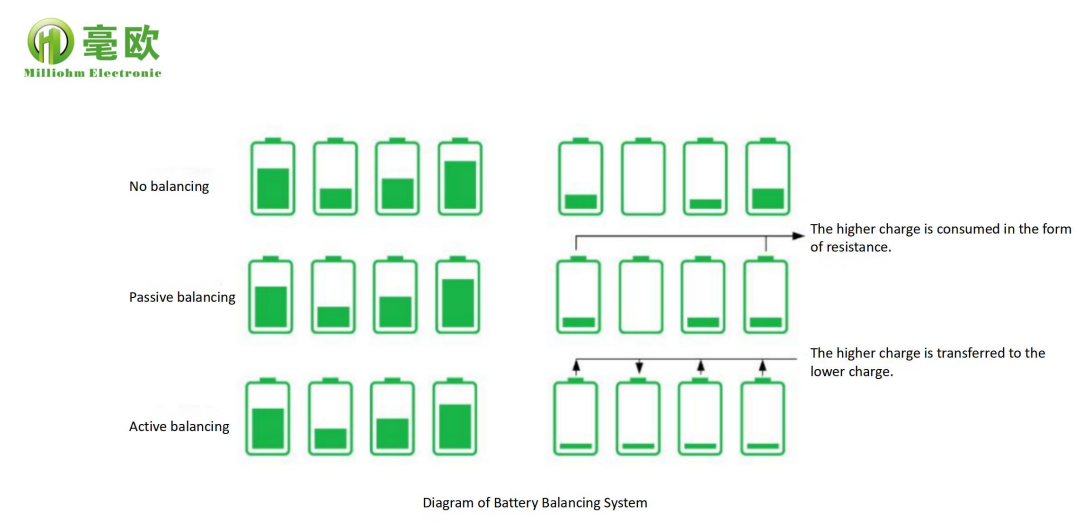
In the battery pack balancing circuit, alloy resistors are used to limit the balancing current, ensuring the voltage difference between individual cells is controlled within 5mV during charging and discharging. When a cell's voltage exceeds the average voltage by 0.05V, the balancing module releases the excess energy through an alloy resistor. The continuous balancing time can be several hours. Key design considerations:
a.The resistor power must meet the power consumption under the maximum balancing current.
b.Use parallel multi-resistor arrays to achieve flexible configuration of the balancing current.
2-3.Temperature Compensation and Thermal Management
While the BMS monitors battery temperature with an NTC thermistor, it uses the low TCR characteristics of alloy resistors for temperature compensation. In the voltage sampling circuit, a 0.1% precision alloy resistor is connected in series with a voltage divider resistor, which can reduce the temperature drift error from ±2% to ±0.3%.
2-4.High-Voltage Interlock and Short-Circuit Protection
In the High-Voltage Interlock (HVIL) circuit, alloy resistors are used to detect the connection status of the high-voltage loop. When a connector becomes loose, the change in loop resistance triggers the BMS to cut off the main relay, with a response time of less than 10ms. In the short-circuit protection module, alloy resistors are used in conjunction with fuses to achieve fast fusing during overcurrent events, with the fusing time being inversely proportional to the square of the current.
3.Application Enhancement and Optimization Solutions
3-1.Impact of Temperature Rise on Sensing Accuracy
When the current exceeds the rated value, the temperature rise of the alloy resistor causes a resistance drift, which affects sensing accuracy. Solutions include:
a.Using thermal simulation software (e.g., Flotherm) to optimize resistor layout and increase the area of heat-dissipating copper foil.
b.Selecting ADC chips with temperature compensation functions to correct resistance changes in real-time.
3-2.Problem of Interference from Parasitic Parameters
Under high-frequency operating conditions (such as dv/dt pulses during motor start/stop), the resistor's pin inductance and PCB parasitic capacitance can cause resonance, leading to oscillations in the sensing signal. Optimization measures:
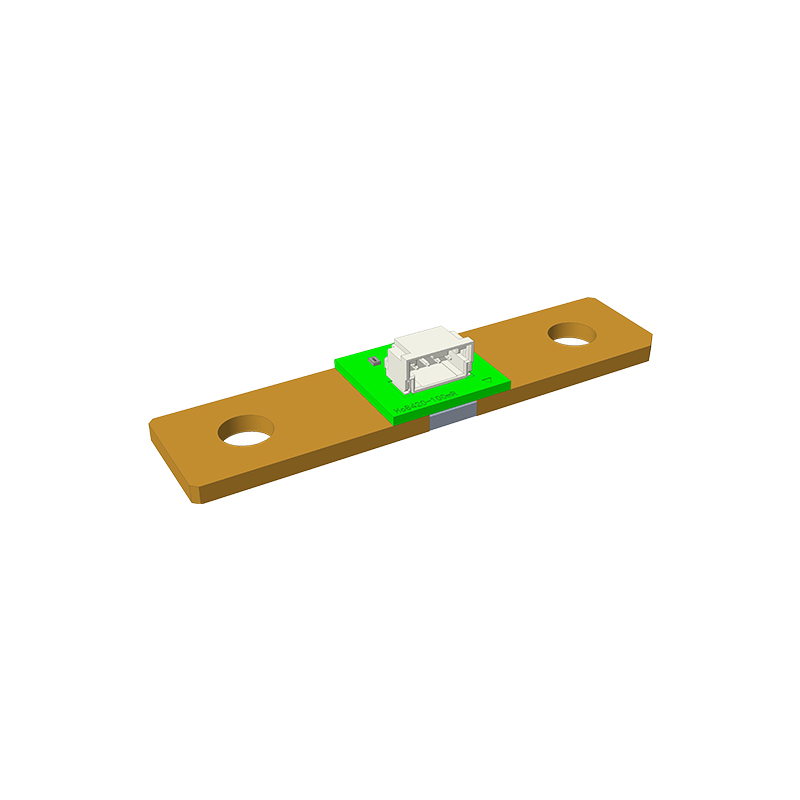
- Use a four-terminal/six-terminal sensing method (e.g., Milliohm Electronic's HoLRS7998) to separate the current path from the voltage sensing path.
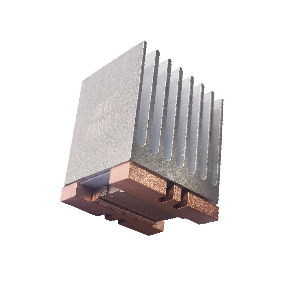
Available Options: In addition to the models listed above, we also offer a 0.5% tolerance option, along with TCR (Temperature Coefficient of Resistance) options of 10ppm/°C, 20ppm/°C, and 25ppm/°C. An optional heat sink is also available.
b.Shorten the resistor pin length and use PCB board materials with a low dielectric constant (e.g., FR-4 TG150).
4. Conclusion
With their high-precision and high-reliability characteristics, alloy resistors have become a core component for achieving precise control and safety protection in automotive BMS. As new energy vehicle technology continues to advance, the performance requirements for alloy resistors will trend toward higher precision, lower power consumption, and greater intelligence. Through material innovation, structural optimization, and system integration, alloy resistors will play an even more important role in the next generation of BMS, helping to improve electric vehicle range and achieve breakthroughs in safety.
Milliohm Electronic offers a rich variety of alloy resistor products and can provide comprehensive technical support and consultation. We can bring higher accuracy and more stable performance to your circuits, helping more reliable and high-end products stand out in the market.
Milliohm Electronic's HoLRS7998 series part number:
HoLRS7998-0.05mR-1%
HoLRS7998-0.1mR-1%
HoLRS7998-0.2mR-1%
HoLRS7998-0.25mR-1%
HoLRS7998-0.3mR-1%
HoLRS7998-0.5mR-1%
Size 7998,or 2025 in metric unit,with width 20mm, length 25mm,six terminals,Achieving higher-precision voltage measurement and an optional heat sink is also available.
In addition to the models listed above, Milliohm Electronic also offer 0.5% tolerance option, along with TCR (Temperature Coefficient of Resistance) options of 10ppm/℃, 20ppm/℃, and 25ppm/℃.
Welcome to contact Milliohm Electronic for more support, email: ho08@moolee.com.cn
(FAQ)A Simple Tip to Avoid a Common Shunt Resistor installation Mistake
Related Article